Evaluating Best First Class Cabin Options: Architectural & Value Guide
Long-haul commercial aviation operates within a tightly constrained operational and financial envelope. High-cabin travel occupies a distinct position inside this landscape. While representing a minor percentage of total floor space on wide-body aircraft, commercial first class accounts for a disproportionate share of yield and brand equity for flagship global airlines.
Evaluating commercial aviation at this level requires moving past marketing promises and superficial amenity kits. Flagship carriers approach cabin architecture through varied design philosophies. Engineering constraints, route economics, fleet composition, and alliance strategies shape the physical layout and service delivery of each product.
This analysis provides a comprehensive framework for assessing elite international flight products. By examining cabin dimensions, hard product designs, award inventory mechanics, and operational vulnerabilities, travelers can systematically evaluate long-haul offerings. Understanding these interconnected systems transforms luxury flight planning from a casual exercise into a predictable, highly optimized outcome.
Understanding “best first class cabin options”
The phrase best first class cabin options describes a holistic evaluation framework for high-tier international air travel. Determining the optimal choice depends heavily on passenger priorities, route architecture, aircraft fleet variants, and redemption mechanics. Superior products align physical comfort with seamless ground infrastructure and high schedule reliability.
The Triad of Cabin Architecture
Analyzing premier aviation products requires isolating three distinct structural dimensions:
Physical Hard Product
Seat pitch, suite enclosure height, bedding density, and ergonomics dictate physical rest quality. Noise attenuation and cabin pressurization levels further influence passenger fatigue on ultra-long-haul flights.
Service and Soft Product
Dedicated cabin crews, personalized dining timing, and specialized ground transfers distinguish true international first class from premium business products. Consistent service execution remains a defining marker of top carriers.
Inventory and Redemption Access
A superior cabin offers limited utility if seat inventory remains locked behind restrictive availability rules. Program accessibility, alliance routing policies, and award chart stability define practical value.
Common Oversimplifications
Travelers frequently equate business class suites with flagship international first class. Modern business class delivers excellent functional privacy and lie-flat beds. However, true international first class offers vastly higher crew-to-passenger ratios, exclusive tarmac transfers, private terminal dining, and significantly larger personal footprints.
Deep Contextual Background
The trajectory of international first class mirrors shifts in aircraft technology and corporate travel budgets. Following global aviation deregulation, flag carriers competed primarily on seat dimensions, caviar service, and white-glove service.
The Business Class Convergence
During the late 1990s, the introduction of lie-flat seats in business class altered cabin economics dramatically. Corporate travel policies shifted toward business class as the product improved. Airlines responded by reconfiguring wide-body fleets. Many operators eliminated first class entirely, reallocating cabin real estate to expand high-density business class sections.
Evolution into Exclusive Halo Suites
As first class cabins shrank from sixteen seats down to four or eight, carriers transformed the remaining space into enclosed luxury suites. Modern flagship aircraft feature floor-to-ceiling doors, separate chairs and beds, and onboard shower spas. First class evolved from a standard corporate travel option into an exclusive halo product designed for high-net-worth individuals and elite loyalty members.
Digital Loyalty Disruption
Simultaneously, financial institutions introduced flexible credit card rewards programs. Transferable points allowed passengers to accumulate currency outside traditional airline frequent flyer systems. This shift democratized access to international suites, forcing carriers to adjust award seat releases and alliance access protocols dynamically.
Conceptual Frameworks and Mental Models
Systematic decision-making requires analytical frameworks. These models help evaluate premium redemptions against real-world opportunity costs.
The Spatial Efficiency Ratio
Airlines measure revenue per square foot of cabin real estate. Passengers must evaluate space relative to ticket cost or point outlay. Evaluating square footage alongside privacy enclosures reveals whether a product justifies its premium over business class.
The Ground-to-Air Value Spectrum
Ground services constitute a major portion of first class value. Private tarmac transfers in luxury sedans, escort services through security, and dedicated lounge dining alter the total travel experience. On shorter long-haul routes, exceptional ground handling often outweighs minor cabin differences.
The Fleet Heterogeneity Index
Airlines frequently operate multiple cabin generations across their fleets. A carrier may offer enclosed suites on newest flagship wide-bodies while flying legacy open suites on older aircraft. Assessing fleet homogeneity prevents unexpected downgrades during aircraft substitutions.
Key Categories or Variations
Evaluating top international options requires categorizing products by cabin layout, service design, and regional philosophy.
Enclosed Floor-to-Ceiling Suites
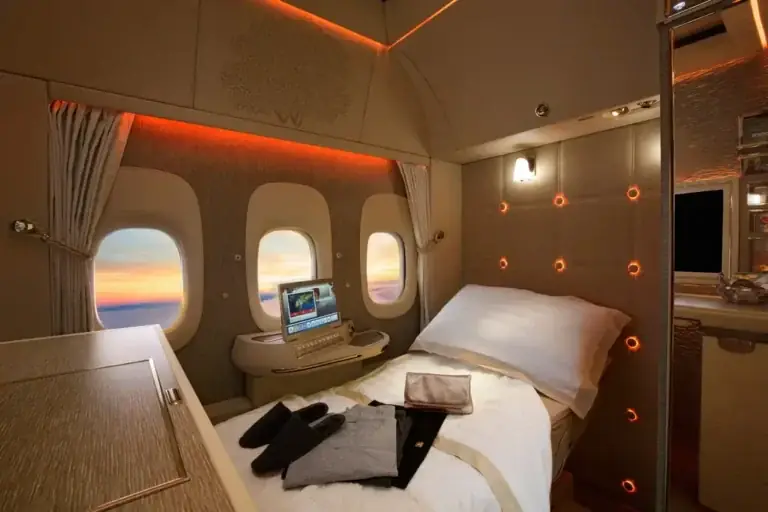
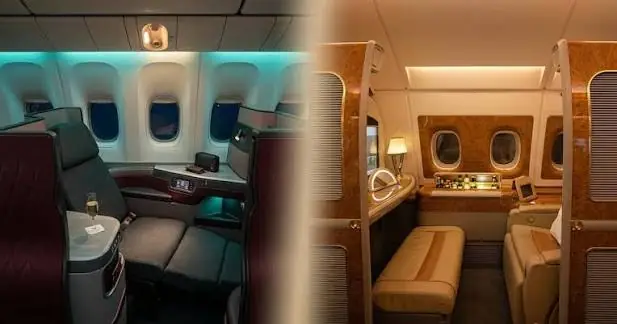
Featuring fully enclosed private rooms, these cabins offer complete visual isolation, ambient lighting controls, and temperature adjustments. They provide unmatched privacy but exist on limited aircraft types.
Open Architecture Flagship Suites
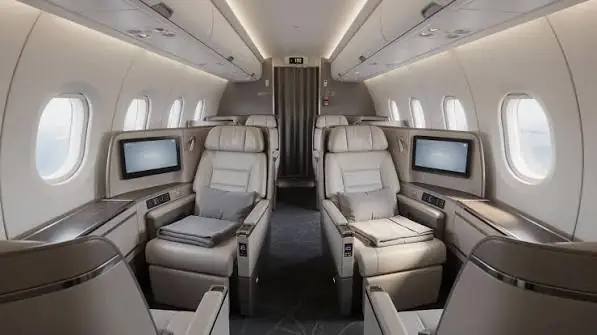
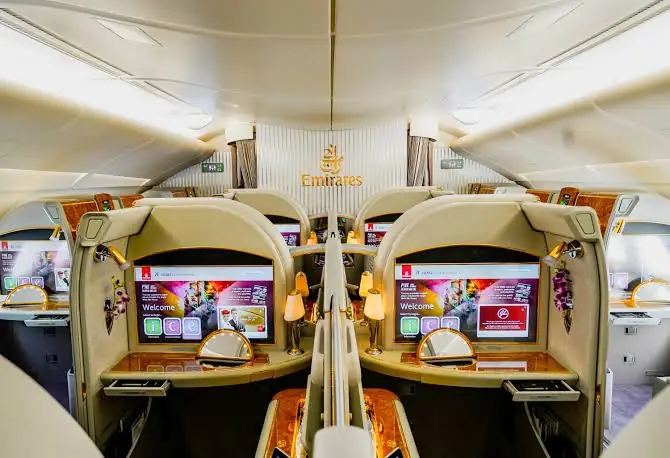
Common among East Asian legacy carriers, open architecture suites prioritize spaciousness, wide armchairs, and effortless crew communication over physical doors. These layouts feel remarkably open while maintaining excellent sightline privacy.
Combined Seat-and-Bed Arrangements
Certain premier carriers offer separate permanent beds alongside traditional armchair seating within a single broad suite. This architecture eliminates the need to convert seats into beds, enhancing inflight convenience.
Apartment and Multi-Room Concepts
Representing the apex of commercial aviation, multi-room suites provide separate living quarters, private vanity areas, and dedicated shower access. These cabins operate on select super-jumbo aircraft routes.
Cabin Architecture Comparison Matrix
Realistic Decision Logic
Choosing among best first class cabin options involves balancing direct route availability against cabin design. A direct flight on an open architecture suite often outperforms an indirect routing on a fully enclosed suite when total travel time remains critical.
Detailed Real-World Scenarios
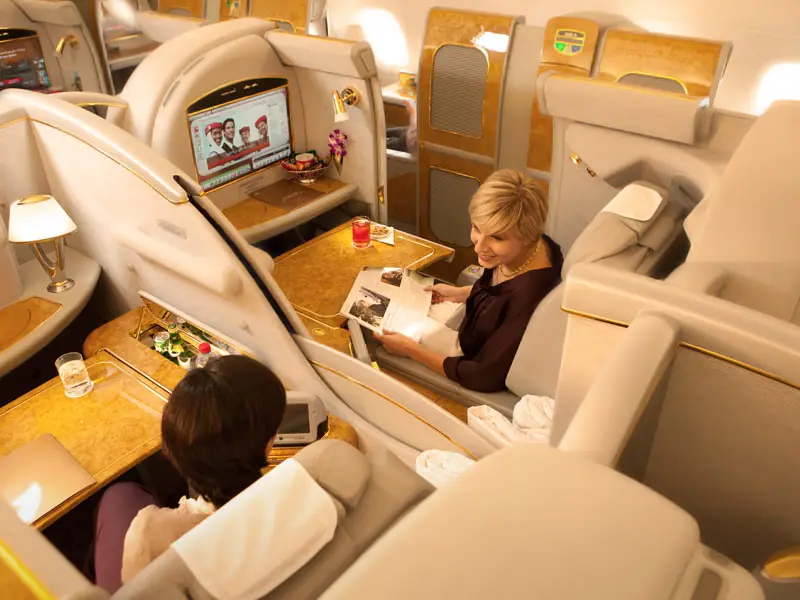
To understand how these strategies function under real-world constraints, consider four distinct operational scenarios.
Scenario 1: Transatlantic Gateway Repositioning
A traveler located in a secondary market seeks an elite European ground experience. Booking a direct business class flight saves time but misses premier ground services. By taking a short feeder flight to a major gateway, the traveler accesses a dedicated first class terminal, private chauffeur transfer to the aircraft, and a flagship transatlantic suite.
Scenario 2: Managing Last-Minute Partner Inventory
An airline opens first class seats to alliance partners only within 72 hours of departure. A traveler secures a flexible business class award early as a safety net. As the departure window approaches, automated tools monitor inventory. When first class space releases, the passenger rebooks immediately, paying minimal change fees.
Scenario 3: Transpacific Aircraft Substitution
Three weeks prior to a transpacific flight, an airline swaps a scheduled flagship aircraft for an older jet featuring legacy seats. The traveler contacts the airline, presents the equipment change, and requests a penalty-free rerouting through an alternate hub operating the updated suite.
Scenario 4: Multi-Carrier Alliance Itinerary
Designing a long-haul itinerary across two partner airlines requires careful connection planning. A tight two-hour transit at a busy hub risks missing a long-haul connection. Allowing a four-hour layover provides sufficient time to utilize private lounge facilities while insulating the trip against flight delays.
Planning, Cost, and Resource Dynamics
Evaluating the financial aspect of premium travel requires accounting for direct cash fees, award point valuations, and opportunity costs.
Financial Resource Matrix
Opportunity Costs and Cash Thresholds
Points represent stored financial value. When carrier-imposed surcharges on an award ticket approach the cash cost of a discounted business class ticket, redeeming points becomes inefficient. Travelers must systematically calculate net redemption values before committing resources.
Tools, Strategies, and Support Systems
Executing a premium cabin strategy requires reliable tracking platforms, search workflows, and contingency protocols.
Essential Search and Booking Architecture
-
Global Inventory Aggregators: Specialized engines that track real-time award seats across multiple airline alliances.
-
Aircraft Fleet Trackers: Live databases detailing specific tail numbers and cabin configurations assigned to upcoming flights.
-
Point Transfer Portals: Flexible financial rewards platforms enabling instant point transfers to partner airline programs.
-
Seat Availability Monitors: Automated notification tools that alert users when specific suite inventory opens up.
Risk Landscape and Failure Modes
Even carefully planned travel can encounter disruptions. Identifying operational vulnerabilities helps mitigate negative outcomes.
Systematic Risk Factors
-
Equipment Swaps: Maintenance events replacing flagship suites with older cabin configurations.
-
Phantom Award Inventory: False award space visible on partner search engines that fails during final ticketing.
-
Alliance Devaluations: Sudden increases in award chart pricing without prior notification.
-
Missed Irregular Operations Connections: Delays causing missed long-haul segments with no remaining first class seats available for days.
Governance, Maintenance, and Long-Term Adaptation
Maintaining an effective long-haul flight strategy requires ongoing management of loyalty currencies and booking practices.
Portfolio Maintenance Checklist
-
Maintain Currency Balance: Keep points in flexible, transferable credit card programs until ready to issue tickets.
-
Audit Account Activity: Regularly review frequent flyer accounts to prevent points from expiring.
-
Verify Equipment Assignments: Monitor seat maps bi-weekly leading up to departure to catch aircraft swaps early.
-
Prepare Backup Options: Keep alternative flights or business class routings in mind if primary space fails to open.
Measurement, Tracking, and Evaluation
Evaluating premium cabin value requires clear quantitative metrics alongside qualitative assessments.
Key Performance Indicators
-
Net Valuation Per Point: Calculated as
(Equivalent Cash Fare - Taxes Paid) / Points Expended. -
Ground Service Integration Score: Rating tarmac transfers, lounge dining quality, and arrival facilities.
-
In-Flight Sleep Quality Index: Assessing noise levels, mattress padding, cabin temperature, and bed length.
Common Misconceptions and Oversimplifications
Myth 1: First Class Is Always Worth the Premium Over Business Class
Modern business class suites offer exceptional comfort. On shorter overnight routes, business class often delivers 90% of the rest quality at a fraction of the cost.
Myth 2: All First Class Suites Feature Private Doors
Many world-class airlines purposefully maintain open suite designs to enhance spatial openness and service delivery. Physical doors do not automatically guarantee a superior flight experience.
Myth 3: Transferring Points Early Secures Seats Faster
Points transferred without verified award availability become trapped in that specific airline program. Always confirm live inventory before executing point transfers.
Ethical, Practical, or Contextual Considerations
Evaluating high-cabin travel also involves understanding environmental and operational realities. First class cabins occupy significantly more floor space per passenger than economy seating, resulting in a higher carbon footprint per seat. Additionally, travelers should account for variable service cultures across international carriers. Hospitality norms vary by region, and understanding cultural nuances enhances interactions with inflight crews.
Strategic Synthesis and Conclusion
Navigating elite international aviation requires analytical precision, patience, and realistic expectations. By understanding cabin layouts, loyalty economics, and risk factors, travelers can consistently secure high-value outcomes. Selecting among the best first class cabin options relies on matching personal travel preferences with optimal route architectures and fleet configurations.
Ultimately, long-term success stems from maintaining flexible point balances, utilizing tracking tools, and remaining adaptable when schedule shifts occur. With structured planning and execution, premium long-haul travel transforms into a reliable, deeply satisfying experience.