Top First Class Flight Plans: A Strategic Booking & Value Guide
Commercial aviation represents a complex intersection of yield management, corporate strategy, and bespoke hospitality. Within this landscape, high-cabin travel remains a small but disproportionately profitable segment for international carriers. For travelers seeking optimal luxury and efficiency, evaluating premium cabin options requires moving beyond surface-level amenities. Understanding how carriers structure product offerings, award seat availability, and fare classes provides the foundation for consistent, high-value outcomes.
Achieving success with commercial aviation redemption programs demands a clear grasp of airline economics. Carriers balance seats reserved for cash-paying corporate clients against inventory allocated for frequent flyer redemptions. Because these inventory algorithms adjust dynamically based on seasonal demand and economic conditions, relying on static rules often leads to missed opportunities. A rigorous, methodical approach enables travelers to navigate these shifting parameters effectively.
This article provides an analytical framework for evaluating premium flight strategies. It examines international award routing rules, structural differences in carrier cabins, dynamic pricing models, and systemic risks. By approaching premium travel as an interconnected system of loyalty currencies and airline partnerships, travelers can systematically secure superior transoceanic experiences.
Understanding “top first class flight plans”
The phrase top first class flight plans refers to structured, repeatable methodologies for booking elite international airline cabins. Rather than relying on sporadic promotions or random searches, a true flight plan integrates route architecture, alliance partnerships, award availability schedules, and transferrable currency strategies. It transforms premium cabin travel from an unpredictable luxury into a predictable, managed outcome.
Core Architecture
At its foundation, a flight plan evaluates three distinct layers:
-
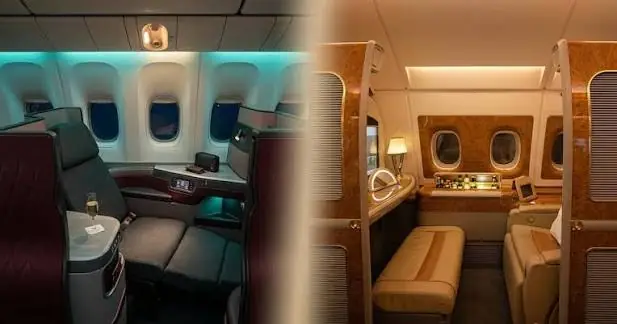
Hard Product Architecture: The physical cabin environment, including seat dimensions, aisle access, suit door enclosures, and bed lengths.
-
Redemption Architecture: The underlying rules governing alliance awards, award chart sweet spots, transfer bonuses, and fuel surcharges.
-
Operational Reliability: Historical schedule stability, aircraft swap risks, and carrier rebooking policies during irregularities.
Common Oversimplifications
Many travelers conflate premium business class with long-haul international first class. While business class emphasizes density and functional privacy, international first class offers ground handling services, private terminal access, bespoke dining, and dedicated cabin crews. Failing to distinguish between these tiers frequently results in suboptimal currency transfers and inflated fees.
Deep Contextual Background
The evolution of international first class reflects broader economic and regulatory shifts in global aviation. Following market deregulation, legacy carriers initially competed on physical seat dimensions and lavish onboard services. However, the introduction of lie-flat seating in business class during the late 1990s dramatically altered cabin economics.
The Shrinking First Class Cabin
As long-haul business class improved, many airlines reduced or eliminated their dedicated first class cabins. Carriers realized that business class offered higher revenue density per square foot of cabin space. Consequently, international first class evolved into an exclusive halo product, restricted to key global business hubs such as London, Tokyo, Frankfurt, Dubai, and New York.
The Rise of Transferable Loyalty Currencies
Simultaneously, the mechanics of booking premium cabins underwent a fundamental transformation. Flexible financial points programs disrupted traditional single-airline frequent flyer models. Travelers gained the ability to hold balance-neutral currencies, moving points to specific airline partners only when confirmable inventory emerged. This shift forced carriers to adjust award seat release patterns and alliance access rules.
Conceptual Frameworks and Mental Models
Navigating long-haul premium travel requires robust decision-making frameworks. These mental models help systematically evaluate redemptions against opportunity costs.
The Value Arbitrage Framework
Loyalty programs routinely misprice award redemptions relative to underlying cash fares. By analyzing distance-based versus region-based award charts, travelers identify asymmetric redemptions where miles required are disproportional to flight length or market fare.
The Aircraft Swap Risk Index
A critical consideration in long-haul planning is equipment substitution. Carriers frequently alter scheduled aircraft types based on maintenance schedules and load factors. Evaluating an itinerary requires calculating the probability of a downgrade or product shift based on route history and fleet homogeneity.
The Unified Cost of Redemption
Evaluating award value solely on points required ignores substantial secondary expenses. A comprehensive calculation incorporates ticket taxes, carrier-imposed surcharges, point acquisition costs, and routing inefficiencies.
Key Categories or Variations
Evaluating long-haul options involves categorizing programs by network style, cabin design, and booking mechanics. Each category presents clear operational trade-offs.
Transpacific Flagship Carriers
East Asian legacy airlines prioritize exceptional service standards, refined onboard dining, and quiet cabin environments. These programs typically feature restricted award space for alliance partners, favoring their own elite members.
Middle Eastern Super-Hub Carriers
Airlines based in the Persian Gulf leverage strategic geographic positioning to offer global single-stop connectivity. Their first class products emphasize spacious physical suites, onboard lounge areas, and luxurious shower facilities. However, fuel surcharges and high redemption rates can offset these physical advantages.
European Transatlantic Legacy Carriers
European legacy operators excel in premium ground services, including dedicated first class terminals, private tarmac transfers, and curated dining facilities. Space release rules are often highly restrictive, opening partner inventory only within weeks or days of departure.
Premium Cabin Trade-Off Matrix
Realistic Decision Logic
When selecting among top first class flight plans, travelers must weigh cabin luxury against schedule flexibility. Direct transatlantic routings on European carriers may save time, whereas Middle Eastern routings offer superior physical comfort at the expense of total travel duration.
Detailed Real-World Scenarios

To illustrate the practical application of these strategies, consider four detailed operational scenarios.
Scenario 1: Transpacific Award Booking with Alliance Arbitrage
A traveler aims to fly from North America to East Asia in peak season. Booking directly through the operating carrier requires an excessive amount of proprietary miles. By utilizing an alliance partner’s distance-based award chart, the required points decrease significantly. The primary constraint is navigating the operating carrier’s strict inventory release calendar.
Scenario 2: European Ground Experience Optimization
A traveler seeks the industry’s finest ground services for a transatlantic trip. The operating carrier restricts first class awards exclusively to its own elite members until 14 days before flight departure. The traveler maintains flexible points balances, sets inventory alerts, and books a refundable business class backup. When first class space opens, the traveler cancels the backup and secures the primary cabin.
Scenario 3: Multi-City Global Itinerary
Designing a complex multi-segment itinerary across multiple alliance partners requires strict adherence to maximum permitted mileage rules and transit limits. A single invalid connection invalidates the entire award routing, emphasizing the need for precise flight segment verification.
Scenario 4: Managing Aircraft Swap Disruptions
A passenger books an ultra-long-haul flight specifically for a newly introduced suite product. Three weeks before departure, the airline substitutes an older aircraft equipped with a legacy seat layout. Understanding contract-of-carriage rights enables the passenger to request a rerouting through an alternate hub operating the updated product without paying change fees.
Planning, Cost, and Resource Dynamics
Evaluating the financial aspect of premium flight plans requires analyzing both direct cash outlays and indirect point opportunity costs.
Estimated Financial Dynamics Matrix
Opportunity Costs and Cash Arbitrage
Earning flexible points involves spending or choosing points over cash-back rewards. When award ticket fees approach the price of a discounted cash business class fare, redeeming points yields diminishing financial returns. Travelers must evaluate redemption value against simple cash alternatives.
Tools, Strategies, and Support Systems
Executing sophisticated aviation strategies requires reliable monitoring tools and structured execution workflows.
Essential Tool Architecture
-
Global Distribution System (GDS) Aggregators: Real-time search tools that track seat inventory across alliance networks.
-
Automated Inventory Alerts: Subscription systems that notify travelers when award seats open on specific flights.
-
Seat Map Trackers: Services that monitor cabin configurations and seat availability shifts.
-
Transferable Point Portals: Credit card reward platforms allowing instant distribution to partner programs.
Risk Landscape and Failure Modes
Even carefully constructed top first class flight plans encounter operational challenges. Proactively identifying risk vectors prevents costly disruptions.
Systematic Risk Factors
-
Dynamic Devaluations: Unannounced award chart increases by loyalty programs that dilute point balances overnight.
-
Phantom Availability: Discrepancies between partner booking engines where inventory appears available but fails during ticketing.
-
Schedule Changes and Irregular Operations: Flight cancellations or time shifts that break multi-ticket connections.
-
Fuel Surcharge Inflation: Sudden increases in carrier-imposed fees that alter the financial viability of an award.
Governance, Maintenance, and Long-Term Adaptation
Maintaining an effective long-haul flight strategy requires continuous management of points balances and program rules.
Portfolio Maintenance Checklist
-
Diversify Currency Holdings: Avoid concentrating points in a single airline program; hold transferable currencies until ready to book.
-
Monitor Expiration Windows: Track account activity rules to prevent point expiration.
-
Audit Transfer Speeds: Stay informed on processing times between flexible currencies and airline partners to avoid transfers lingering during space availability windows.
-
Maintain Backup Routings: Always identify alternative flights or cabin options if primary space fails to open.
Measurement, Tracking, and Evaluation
Evaluating the success of premium travel strategies requires metrics beyond simple cash-per-point calculations.
Primary Evaluation Metrics
-
Net Cents Per Point (NCPP): Calculated as
(Cash Fare - Surcharges) / Points Redeemed. This measures true financial return on points. -
Schedule Efficiency Index: Comparing total travel time of an award routing against the fastest available non-stop commercial path.
-
Product Consistency Score: Evaluating whether the booked cabin delivers the intended physical product without equipment downgrades.
Common Misconceptions and Oversimplifications
Myth 1: Booking Far in Advance Always Guarantees Space
While many carriers release award inventory 330 days out, others release premium seats only days before departure based on unsold commercial inventory.
Myth 2: All First Class Products Are Superior to Business Class
Modern suite-style business class products frequently outperform legacy first class cabins on older aircraft. Evaluating the specific aircraft configuration is vital.
Myth 3: Transferring Points Early Secures Better Options
Transferring points without confirming live award space traps currency in an inflexible airline program, exposing it to potential devaluations.
Strategic Synthesis and Conclusion
Mastering long-haul travel demands methodical research, analytical rigor, and operational flexibility. By treating luxury aviation as a structured discipline rather than an unpredictable splurge, travelers unlock consistent access to global flight opportunities. Developing robust top first class flight plans ensures that time, capital, and loyalty resources are deployed efficiently across international air networks.
Ultimately, long-term success relies on maintaining balance-neutral point portfolios, monitoring inventory trends, and remaining adaptable when conditions change. Through informed planning and precise execution, luxury long-haul travel becomes a manageable, highly rewarding component of international travel.