Best First Class Upgrades for International Travel: Global Yield Blueprint
Securing front-cabin space on long-haul international flights represents a major optimization challenge in modern commercial aviation. Long intercontinental routes subject passengers to significant physical fatigue, making fully flat beds, enclosed suites, and dedicated ground services valuable operational assets. However, purchasing international first class seats at full retail cash fares requires substantial financial outlays that often exceed standard travel budgets.
Airlines manage premium inventory using complex yield algorithms designed to extract maximum revenue from every flight. Unsold front-cabin seats represent unrecoverable losses once the aircraft doors close. Consequently, carriers deploy dynamic upgrade mechanisms—including cash bidding platforms, mileage co-pay instruments, and day-of-departure offers—to monetize remaining premium inventory without diluting baseline retail pricing.
Navigating this dynamic landscape demands moving past superficial travel hacks. Evaluating international upgrade mechanics requires analyzing fare basis codes, fleet hardware consistency, loyalty currency valuations, and carrier alliance rules. A systematic approach enables travelers to identify genuine high-value opportunities while avoiding restricted fares and poor seat configurations.
The Dynamics of Long-Haul Inventory
International carriers allocate front-cabin inventory across distinct fare buckets governed by strict market rules. High-yield corporate routes connecting global financial hubs feature limited upgrade availability due to strong advance retail demand. Conversely, long-haul seasonal corridors frequently open secondary upgrade windows as departure dates approach.
Ground and Air Inclusions
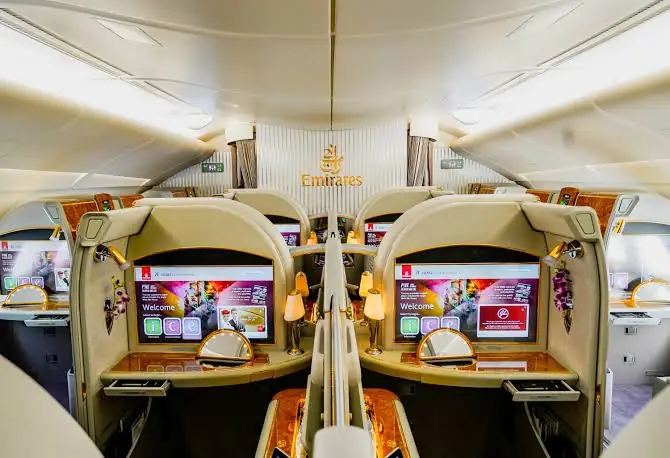
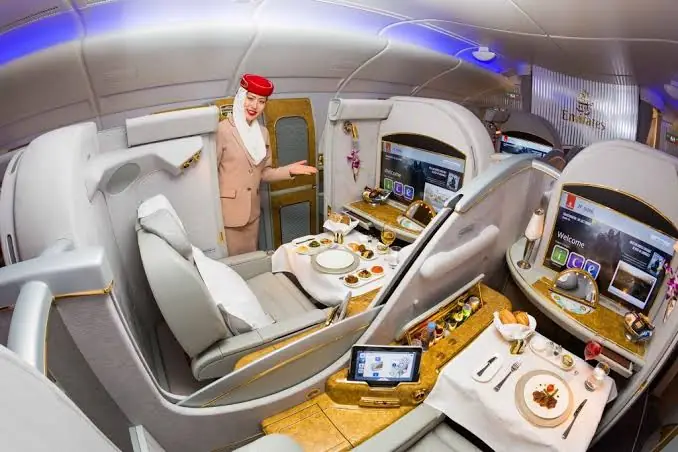
Evaluating an international upgrade requires looking beyond the physical seat. Full-service international first class upgrades often grant access to exclusive flagship ground facilities, private security processing, fine dining rooms, and increased baggage allowances. Understanding these total ecosystem inclusions helps travelers calculate true net value.
Understanding “best first class upgrades for international travel”
Securing the best first class upgrades for international travel requires analyzing revenue management mechanics rather than relying on chance. Commercial airlines treat premium seats as perishable assets subject to continuous price and availability adjustments. Understanding how carriers release upgrade inventory allows passengers to deploy capital and loyalty points efficiently.
Multi-Perspective Analysis
Financial managers analyze upgrades through marginal cost calculations, weighing out-of-pocket fees against gains in sleep quality and productivity. Frequent international travelers evaluate upgrades through operational transit friction, prioritizing direct aisle access, layover lounge amenities, and schedule reliability.
Airlines analyze upgrades through consumer surplus extraction. Systems aim to collect secondary revenue from price-sensitive passengers without cannibalizing full-fare business purchases. When premium demand lags, revenue management algorithms automatically release upgrade seats across cash bidding channels or mileage reward tiers.
Oversimplification and Valuation Traps
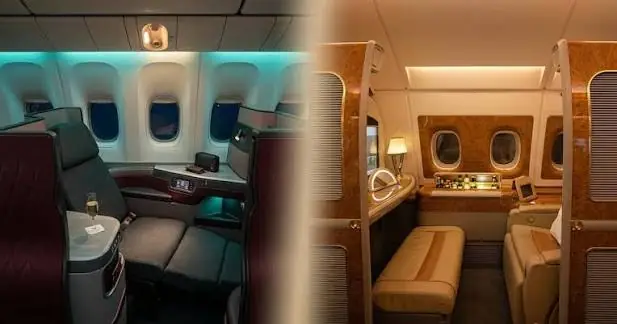
A common error involves assuming that all international premium products deliver uniform comfort. Legacy aircraft configurations often feature older seating designs with limited privacy or angled lie-flat surfaces. Verifying exact aircraft tail numbers and cabin maps prevents overpaying for outdated hardware.
Another mistake involves ignoring hidden co-pay fees and cash surcharges. Certain foreign carrier mileage upgrades require heavy cash fees alongside points, drastically reducing the net financial benefit of the transaction.
Deep Contextual Background
Historically, international first class upgrades operated under static, paper-based tariff rules. Passengers purchased flexible, full-fare economy tickets and presented mileage certificates at ticket counters to request front-cabin seat assignments.
The Expansion of Revenue Management
The deregulation of global aviation and the introduction of advanced computing power transformed inventory control. Airlines introduced nested fare codes and dynamic yield algorithms, allowing real-time adjustment of upgrade availability based on historical route demand patterns.
The Arrival of Dynamic Bidding
In recent years, airlines have partnered with specialized software platforms to conduct blind auctions for unbooked front-cabin seats. This system captures variable passenger willingness to pay while protecting baseline retail fare structures.
Today, international upgrades operate across a hybrid ecosystem encompassing mileage co-pay redemptions, dynamic cash bids, elite status certificates, and last-minute gate offers.
Conceptual Frameworks and Mental Models
The Hourly Marginal Rest Value
This mathematical framework evaluates the cash or mileage cost of an upgrade relative to flight duration and rest quality.
If an international upgrade costs $600 for a twelve-hour overnight flight, the marginal cost equals $50 per hour. Travelers can compare this rate against productivity benchmarks or personal value limits.
The Opportunity Cost Matrix
Using loyalty points for upgrades creates an opportunity cost against redeeming those points for future full-award tickets.
The Total Ecosystem Value Model
A thorough calculation accounts for ancillary savings provided by front-cabin tickets, including waived checked bag fees, fast-track security processing, international flagship lounge access, and inflight catering.
Key Categories or Variations
Achieving long-haul international upgrades involves several distinct mechanisms, each presenting unique balance points between cash spend, effort, and certainty.
1. Mileage Plus Cash Co-Pay Redemptions
Passengers pay a fixed mileage amount alongside a standardized cash co-pay to upgrade from economy or premium economy into business or first class cabins.
2. Dynamic Blind Auction Bidding
Carriers invite ticketed passengers to submit cash bids within a specified range prior to departure, clearing winning bids based on remaining seat capacity.
3. Systemwide Elite Certificates
High-tier loyalty members receive confirmable upgrade certificates that bypass cash fees, subject to specific fare code availability.
4. Day-of-Departure Gate Offers
Airlines offer deeply discounted cash upgrades at airport check-in kiosks or departure gates to monetize remaining unsold space.
5. Standby Mileage Waitlists
Passengers request mileage upgrades on fully booked flights, placing their request on a prioritized waitlist that clears at the gate if seats remain open.
6. Corporate Contract Fare Conversions
Enterprise travel agreements often include auto-upgrade clauses or discounted conversion rates negotiated at the institutional level.
International Upgrade Mechanism Breakdown
Detailed Real-World Scenarios
Scenario A: Transpacific Overnight Red-Eye
A traveler faces a fourteen-hour overnight flight from Los Angeles to Tokyo.
-
Constraint: Need to arrive fully rested for morning business commitments.
-
Decision Point: Choosing between a $750 dynamic cash bid and a 30,000-point mileage co-pay request.
-
Evaluation: The traveler assesses point valuations and submits the cash bid, preserving points for future award tickets.
Scenario B: Transatlantic European Return
A leisure traveler flies back from London to Chicago during peak summer travel.
-
Constraint: Tight personal travel budget with high baseline cash fares.
-
Decision Point: A $450 day-of-departure gate offer displays at the airport check-in kiosk.
-
Evaluation: Calculating the marginal cost at $56 per hour for an eight-hour flight, the traveler accepts the offer, gaining flagship lounge access and lie-flat comfort.
Scenario C: Multi-Leg Partner Routing
A passenger holds a ticket spanning a short domestic feeder leg and a long-haul international segment.
-
Constraint: High mileage co-pay requirement across the entire itinerary.
-
Decision Point: Applying the upgrade specifically to the long-haul international leg rather than the domestic connection.
-
Second-Order Effect: Optimizing the point spend ensures maximum comfort per point used on the overnight flight.
Planning, Cost, and Resource Dynamics
Executing a long-haul upgrade strategy requires analyzing both direct cash charges and secondary expenses over time. Securing the best first class upgrades for international travel depends on tracking yield management trends across major carriers.
Capital Allocation Dynamics
Travelers should maintain clear expenditure thresholds for cash and points transactions. Establishing predefined limits prevents impulsive decisions during the check-in window.
Tools, Strategies, and Support Systems
Strategy 1: Real-Time Seat Map Auditing
Monitoring cabin assignment maps reveals unbooked seat volume, helping evaluate the probability of cash bids or waitlists clearing.
Strategy 2: Historical Bid Benchmarking
Reviewing historical bid acceptance ranges on travel forums helps optimize bid amounts without overpaying.
Strategy 3: Fare Code Restriction Inspection
Checking exact fare basis codes ensures that basic economy or deeply discounted fares do not block mileage upgrade eligibility.
Strategy 4: Alliance Partner Inventory Cross-Checking
Searching for partner award availability can expose open upgrade space on code-share flights operated by partner airlines.
Risk Landscape and Failure Modes
Non-Refundable Cash Losses
Cash upgrade fees are typically non-refundable. If flight schedule modifications occur, recovering upgrade payments requires manual intervention.
Equipment Substitutions
Carriers reserve the right to swap aircraft types due to maintenance needs. Replacing a modern suite with an older layout significantly reduces product value.
Irregular Operations (IROPS) Reset
During severe weather delays, upgraded passengers may lose front-cabin seat assignments when rebooked on alternative flights.
Governance, Maintenance, and Long-Term Adaptation
Reviewing upgrade strategies annually ensures that points accumulation and cash deployment align with current airline policies.
Measurement, Tracking, and Evaluation
A structured evaluation framework helps track the real financial performance of long-haul upgrade strategies over time.
Key Performance Indicators
Common Misconceptions and Oversimplifications
Myth 1: Dressing Well Increases Upgrade Odds
Gate agents distribute upgrades based strictly on revenue algorithms and status hierarchies, not attire.
Myth 2: Minimum Cash Bids Always Fail
Minimum bids frequently succeed on low-occupancy long-haul flights during off-peak seasons.
Myth 3: Upgrades Always Include Flagship Lounge Entry
Certain discounted cash upgrade fares explicitly exclude flagship lounge privileges.
Myth 4: Early Check-In Guarantees Waitlist Priority
Waitlist priority is determined by elite status tier, fare class code, and time of request, not check-in sequence.
Ethical, Practical, or Contextual Considerations
Travelers must balance personal comfort preferences against enterprise travel policies and environmental considerations. Front-cabin seats occupy a larger physical footprint per passenger, resulting in higher carbon emissions per seat mile. Evaluating travel necessity ensures responsible capital allocation and resource management.
Conclusion
Securing the best first class upgrades for international travel requires combining analytical research with flexible strategy execution. By evaluating mileage co-pays, dynamic cash bids, and fleet hardware configurations, travelers can consistently capture front-cabin comfort. A structured approach turns complex international upgrade options into predictable, high-value travel outcomes.