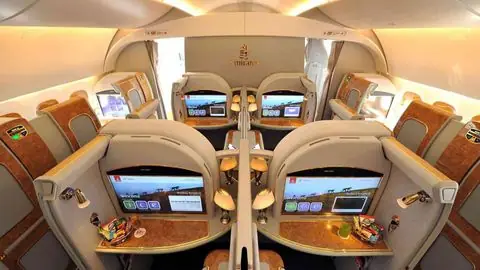
Best First Class Seats for Couples: Layout Architecture
Evaluating premium aircraft cabin design requires understanding spatial architecture, seating configurations, and privacy mechanisms. The commercial aviation industry has shifted toward maximizing personal privacy for solo travelers. Consequently, long-haul cabin designs frequently isolate passengers using high suite walls, angled seat shells, and fixed center partitions.
Designing cabin environments that balance individual privacy with shared space for dual travelers introduces complex spatial challenges. Seat manufacturers and airline fleet planners utilize various configurations, including middle suites with retractable dividers, adjacent window-aisle pairings, and double-bed suite designs. Each layout introduces distinct operational trade-offs regarding sightlines, conversational ease, and sleeping comfort.
A rigorous assessment of front-cabin seating for joint travelers must extend beyond marketing photographs. Physical dimensions, divider mechanics, galley proximity, and sub-fleet variations directly influence the inflight experience. Navigating these variables allows passengers to select cabin configurations that genuinely align with their shared travel requirements.
Understanding “best first class seats for couples”
Identifying the best first class seats for couples involves auditing cabin geography and seating mechanics rather than relying on carrier marketing. Long-haul front cabins feature diverse seating configurations designed under differing privacy paradigms. A suite layout optimized for solo business travelers often restricts interaction between companions traveling together.
Multi-Perspective Breakdown
Airlines approach cabin design through density optimization and passenger yield metrics. Installing fully enclosed double suites requires substantial floor space, reducing total cabin seat capacity. Carriers must balance high-premium suite demand against general inventory density across long-haul networks.
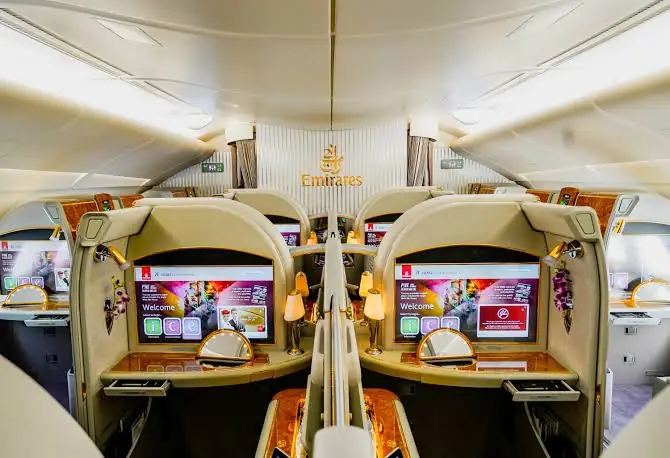
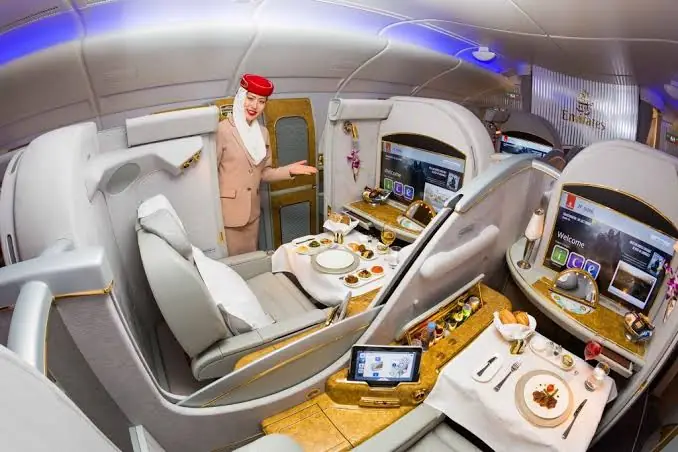
Travelers evaluate paired seating through interaction quality, physical proximity, and shared dining capabilities. A central suite featuring a retractable privacy screen allows joint dining and shared conversation. Fixed-partition layouts force companions to lean forward or stand up to maintain eye contact.
Misconceptions and Spatial Traps
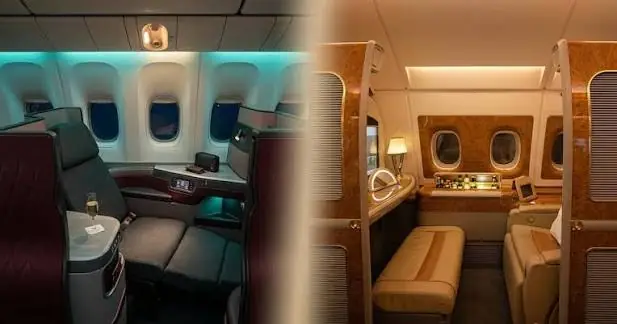
A common error involves assuming that all center-aisle seat pairs permit natural conversation. Reverse-herringbone configurations angle center seats away from each other toward the aisles, placing passengers’ heads far apart behind thick carbon-fiber shells.
Similarly, staggered cabin layouts position center seats close together on alternating rows while separating them with wide consoles on adjacent rows. Selecting the incorrect row number can turn an intended joint suite into two isolated seats separated by plastic dividers.
Deep Contextual Background
Historically, commercial front cabins featured open, non-partitioned seating layouts. Wide recliner seats were arranged in traditional side-by-side configurations, providing effortless interaction for companions but minimal privacy from surrounding passengers.
The Shift Toward Solo Privacy
The introduction of lie-flat seating in the late twentieth century transformed long-haul cabin architecture. To capture high-yield corporate travelers, airlines prioritized individual privacy. Seats were enclosed within high shells, angled toward windows, or separated by fixed privacy partitions.
The Arrival of Convertible Middle Suites
Recognizing that strict isolation alienated premium leisure travelers, progressive carriers pioneered convertible suite systems in the 2010s. Modern center-suite designs feature motor-driven dividers that lower completely, allowing adjacent seats to merge into shared spaces or full double beds.
Today, long-haul cabin configurations reflect a balance between solo privacy pods, staggered center pairs, and fully convertible double suites.
Conceptual Frameworks and Mental Models
The Conversational Pitch Index
This model calculates the physical distance and sightline angle between two seated passengers to measure conversational ease.
A lower index score indicates closer physical proximity and direct sightlines, facilitating natural conversation without strain.
The Spatial Continuum Model
Evaluating dual-passenger cabin options requires assessing three distinct flight phases: taxi-takeoff-landing, dining-work, and sleep periods.
The Sub-Fleet Variation Matrix
This framework addresses aircraft substitution risks by tracking whether an airline deploys consistent suite hardware across its long-haul fleet or uses varying configurations on identical routes.
Key Categories or Variations
Front-cabin configurations for joint travelers vary by physical layout, partition engineering, and seat orientation.
1. Fully Convertible Center Double Suites
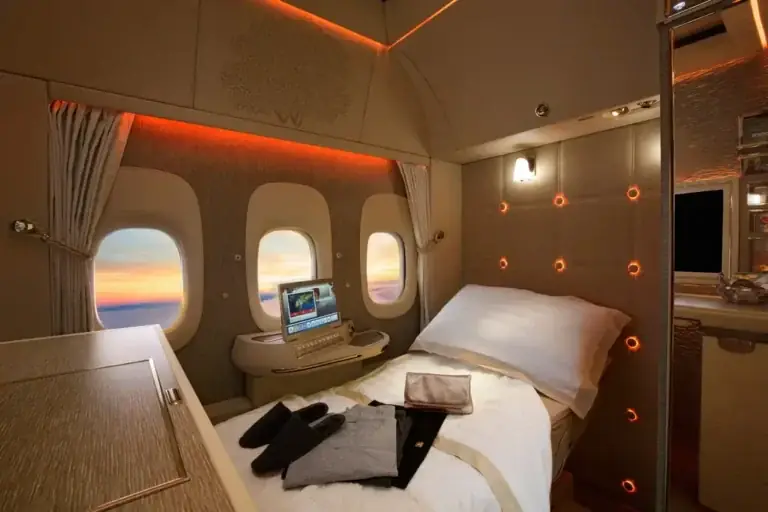
Featuring center seats that join together when dividers drop, these suites create a shared double-bed surface with sliding outer privacy doors.
2. Parallel Center Seats with Retractable Dividers
Standard forward-facing center seats separated by a drop-down partition permit easy communication and shared dining while maintaining separate sleeping surfaces.
3. Staggered Honeymoon Suites
Alternating row configurations place center seats directly adjacent to each other on specific rows, separated from the aisles by outer armrests.
4. Quad-Suite Convertible Configurations
Flexible seating blocks allow four center seats to merge into a shared room, which can be configured as two facing double suites for traveling companions.
5. Angled Reverse-Herringbone Center Pairs
Center seats angled outward toward the aisles position passengers’ feet together while separating their heads behind seat shells, restricting natural interaction.
6. Window-Aisle Tandem Layouts
Airlines featuring single-column layouts align seats vertically along the fuselage, requiring companions to sit in consecutive rows rather than side by side.
Configuration Characteristics Comparison
Detailed Real-World Scenarios
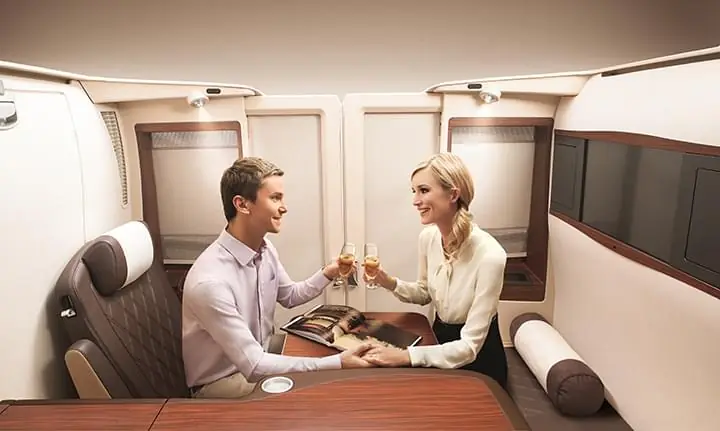
Scenario A: Long-Haul Transpacific Overnight Flight
A couple travels non-stop from Los Angeles to Sydney on a flagship widebody jet.
-
Constraint: Need for uninterrupted overnight sleep and shared dining.
-
Decision Point: Booking center honeymoon suites versus window-aisle pairings.
-
Evaluation: Selecting center honeymoon seats allows the dropping of the center screen, forming a shared flat surface for sleeping.
Scenario B: Transatlantic Day Flight
Companions fly from New York to London on a business trip.
-
Constraint: Requirement to conduct joint work and document reviews during flight.
-
Decision Point: Choosing between an angled reverse-herringbone pair and a parallel center suite with drop-down dividers.
-
Failure Mode: Reverse-herringbone seats angle headrests away, forcing passengers to stand up to share papers.
-
Resolution: Selecting parallel center seats provides direct table alignment and easy document sharing.
Scenario C: Unannounced Equipment Substitution
Travelers reserve a convertible double suite on a route served by mixed aircraft models.
-
Constraint: Maintaining adjacent seating after an aircraft swap.
-
Decision Point: The airline substitutes an older widebody featuring 2-2-2 forward-facing seats.
-
Second-Order Effect: Although double-bed functionality is lost, adjacent window-aisle seats preserve side-by-side seating.
Planning, Cost, and Resource Dynamics
Securing optimal paired seating requires analyzing seat assignment rules, fare categories, and inventory availability. Identifying the best first class seats for couples depends on reserving target center suites early in the booking window.
Capital Allocation Strategies
Travelers should evaluate whether premium suite surcharges deliver tangible comfort gains. Investing in fully convertible double suites provides clear value on overnight transoceanic routes, whereas standard center seats suffice on daytime flights.
Tools, Strategies, and Support Systems
Strategy 1: Interactive Seat Map Auditing
Utilizing specialized aircraft seat platforms allows travelers to verify exact row alignment, divider mechanics, and proximity to galleys.
Strategy 2: Tail-Number Fleet Tracking
Monitoring historical aircraft deployments on specific route numbers helps identify whether an assigned flight uses updated double-suite cabins.
Strategy 3: Fare Basis Inclusion Inspection
Checking fare basis codes ensures that entry-level unbundled business tickets do not restrict advance seat assignment rights.
Strategy 4: Call-Center Manual Assignment Requests
Contacting airline reservation desks directly allows passengers to request blocked center suites that appear unavailable on public booking engines.
Risk Landscape and Failure Modes
The Reverse-Herringbone Isolation Trapped State
Reserving center seats on reverse-herringbone aircraft under the assumption of joint seating leaves passengers isolated behind fixed shells.
Middle-Console Division Barriers
Certain staggered layouts feature wide immovable consoles between center seats on alternating rows, preventing shared dining or conversation.
Aircraft Equipment Swaps
Last-minute aircraft substitutions can replace convertible suite cabins with standard solo-focused layouts, separating companions across different cabin sections.
Governance, Maintenance, and Long-Term Adaptation
Evaluating cabin options systematically ensures consistent seating quality across all itineraries.
Measurement, Tracking, and Evaluation
A structured evaluation framework helps travelers track the real value of their paired seat selections over time.
Key Performance Indicators
Common Misconceptions and Oversimplifications
Myth 1: All Center Seats Are Ideal for Couples
Reverse-herringbone center seats angle headrests toward outer aisles, making conversation difficult without leaning forward.
Myth 2: Window Seats Are Always Superior
Window pairs do not exist on modern 1-2-1 single-aisle access layouts; companions selecting window seats are separated by an entire aisle.
Myth 3: Double-Bed Suites Are Standard in First Class
Fully convertible double beds exist on a select group of flagship international carriers and specific widebody aircraft models.
Myth 4: Booking Early Guarantees Cabin Hardware
Airlines reserve the right to alter fleet assignments up to departure time due to maintenance or operational demands.
Ethical, Practical, or Contextual Considerations
Evaluating cabin selection involves balancing personal comfort preferences against aircraft resource allocation. Fully enclosed double suites occupy substantial cabin floor space, increasing the physical footprint per passenger. Travelers can weigh these spatial factors when determining whether a flagship double suite is necessary for a route.
Conclusion
Selecting the best first class seats for couples requires analyzing cabin geography, divider engineering, and fleet deployment patterns. By focusing on fully convertible center suites, verifying row alignment, and tracking sub-fleet consistency, companions can secure exceptional shared comfort. A methodical pre-booking audit transforms long-haul travel into a seamless, shared experience.