How to Avoid First Class Booking Mistakes: Executive Travel Pitfalls
Securing premium air travel represents a major capital expenditure, whether settled via corporate budgets, personal liquidity, or accumulated loyalty assets. Despite significant financial outlays, travelers frequently encounter frustrating operational friction, product downgrades, and unexpected fee structures. Front-cabin reservations operate under intricate contractual conditions, technical yield rules, and complex fleet distribution schemes.
Modern aviation revenue optimization relies on precise segmentation strategies. Airlines routinely unbundle services, introduce restrictive fare classes within business and first cabins, and alter aircraft deployments on short notice. Navigating these complexities requires rigorous evaluation beyond reviewing simple seat diagrams or marketing collateral.
A systemic approach helps safeguard both monetary investments and personal comfort expectations. Travelers who understand fare basis codes, aircraft layout nuances, and partner ticketing vulnerabilities can proactively protect their itineraries. Mastering these details transforms unpredictable travel outcomes into controlled, high-value experiences.
Understanding “how to avoid first class booking mistakes”
Learning how to avoid first class booking mistakes requires analyzing ticket contracts and operational realities rather than relying on brand reputations. Premium cabins across major airlines differ wildly in physical layout, privacy features, catering standards, and ground service inclusions. Consequently, a premium label alone does not guarantee a uniform level of comfort or service.
Structural Realities and Industry Friction
Travelers often assume that all first class seats provide lay-flat capabilities or direct aisle access. Regional routes and narrowbody jets frequently utilize traditional recliner seats marketed under identical cabin classifications as international suites. Recognizing these equipment distinctions is crucial to setting proper expectations.
Airlines also enforce strict fare restrictions on discounted business and first class tickets. Certain entry-level premium fares now explicitly exclude lounge access, advance seat selection, or full mileage accrual. Failing to inspect these micro-terms often leads to unwelcome surprises at the airport departure gate.
Oversimplification and Valuation Errors
Another frequent error involves overestimating the value of mileage upgrades relative to direct cash fares. Travelers sometimes expend massive point balances alongside cash co-pays on flights where direct cash tickets cost only slightly more.
Evaluating the complete travel ecosystem protects against poor capital allocation. True value encompasses ground transportation efficiency, lounge access quality, baggage handling priorities, and rebooking flexibility during schedule disruptions.
Deep Contextual Background
Historically, premium cabin travel operated under straightforward, all-inclusive fare structures. Purchasing a first class ticket guaranteed comprehensive services, including top-tier lounge access, flexible ticket changes, and superior onboard accommodations across all aircraft types.
The Unbundling of Premium Cabins
Over the past decade, major international carriers introduced unbundled fare structures into front cabins. Driven by aggressive revenue management goals, airlines created restricted fare tiers to compete with low-cost carriers on price aggregation platforms while charging extra for traditional perks.
This shift introduced substantial complexity into the purchasing process. Passengers must now scrutinize whether a listed first class fare includes essential benefits like seat assignments or lounge access.
Operational Complexity and Fleet Mixing
Simultaneously, carriers expanded multi-fleet operations featuring vastly different seating generation technologies. An airline might fly three distinct business class seat configurations across its long-haul fleet, creating significant variance in passenger comfort depending on the assigned aircraft tail number.
Conceptual Frameworks and Mental Models
The True Product Equity Model
This analytical framework evaluates the total physical and experiential deliverable rather than relying on marketing labels.
Calculating this metric prevents overpaying for regional recliner seats marketed at intercontinental pricing levels.
The Fleet Consistency Matrix
Assessing fleet uniformity minimizes the operational risk associated with unexpected equipment swaps.
The Ticket Flexibility Paradigm
Travelers must weigh the financial savings of non-refundable, unbundled premium tickets against the operational freedom offered by flexible fare codes.
Key Categories or Variations
Understanding common reservation traps helps buyers navigate options effectively.
1. Equipment Swap Vulnerability
Airlines retain the contractual right to substitute aircraft types up to departure time. Booking routes operated by mixed-fleet aircraft increases the risk of being reassigned to older cabin configurations.
2. Unbundled Premium Fare Tiers
Certain carriers offer reduced rates that strip away baggage allowances, lounge entry, and ticket change flexibility.
3. Mixed-Cabin Partner Ticketing
Award redemptions or multi-leg partner tickets sometimes place passengers in economy for crucial connecting flights without clear notification during checkout.
4. Phantom Award Space
Loyalty platforms occasionally display award seats that fail to confirm during final payment processing, locking up points unnecessarily.
5. False First Class Classifications
Regional flights frequently label standard domestic business seats as first class, creating unrealistic expectations for international travelers.
6. Misaligned Codeshare Inclusions
Booking an itinerary through a partner airline can lead to conflicting luggage policies and denied lounge privileges due to misaligned partner agreements.
Operational Trade-Offs
Detailed Real-World Scenarios
Scenario A: The Long-Haul Equipment Substitution
A traveler books a premium suite with sliding privacy doors for an international flight.
-
Constraint: Crucial need for undisturbed sleep prior to a key presentation.
-
Decision Point: Airline substitutes an older aircraft featuring open-angle seats three hours before departure.
-
Failure Mode: Inability to lie fully flat leads to exhaustion.
-
Second-Order Effect: Decreased performance during business meetings invalidates the financial investment.
Scenario B: The Unbundled Partner Award Trap
A passenger uses credit card points transferred to an international carrier to book a business seat on a partner airline.
-
Constraint: Tight three-hour layover at a major global hub.
-
Decision Point: The traveler arrives at the partner lounge but is denied entry because the award booked under a basic fare code.
-
Failure Mode: Lack of resting facilities and complimentary dining forces unexpected airport spending.
-
Second-Order Effect: Increased stress and unbudgeted out-of-pocket costs.
Scenario C: The Regional Connection Misstep
A traveler reserves a first class itinerary spanning a long-haul leg and a regional connecting flight.
-
Constraint: Heavy checked luggage allowance required for an extended trip.
-
Decision Point: The regional feeder leg is operated by a turboprop aircraft with restricted overhead bin dimensions.
-
Failure Mode: Luggage must be gate-checked, resulting in delays and minor damage to fragile equipment.
-
Second-Order Effect: Disrupted transit timeline at the destination airport.
Planning, Cost, and Resource Dynamics
Financial management requires anticipating hidden fees and opportunity costs associated with premium travel. Knowing how to avoid first class booking mistakes ensures that capital allocation aligns with actual delivered value.
Capital Protection Principles
Travelers should balance non-refundable cash outlays against the flexibility provided by fully refundable tickets or transferable point options.
Tools, Strategies, and Support Systems
Strategy 1: Tail-Number Fleet Tracking
Utilizing specialized aircraft tracking services allows travelers to monitor historical aircraft deployments on specific route numbers.
Strategy 2: Direct Fare Basis Inspection
Reviewing exact fare codes (such as J, C, D, Z, or P) exposes restricted unbundled conditions prior to purchase.
Strategy 3: Real-Time Seat Map Auditing
Monitoring cabin assignment maps reveals layout changes early, enabling proactive rebooking if an equipment swap occurs.
Strategy 4: Direct Partner Verification
Calling operating carriers directly to verify seat assignments on codeshare itineraries prevents gate-side errors.
Risk Landscape and Failure Modes
Contractual Limitations
Conditions of carriage typically protect airlines against claims resulting from equipment substitutions or schedule modifications.
Irregular Operations (IROPS) Vulnerabilities
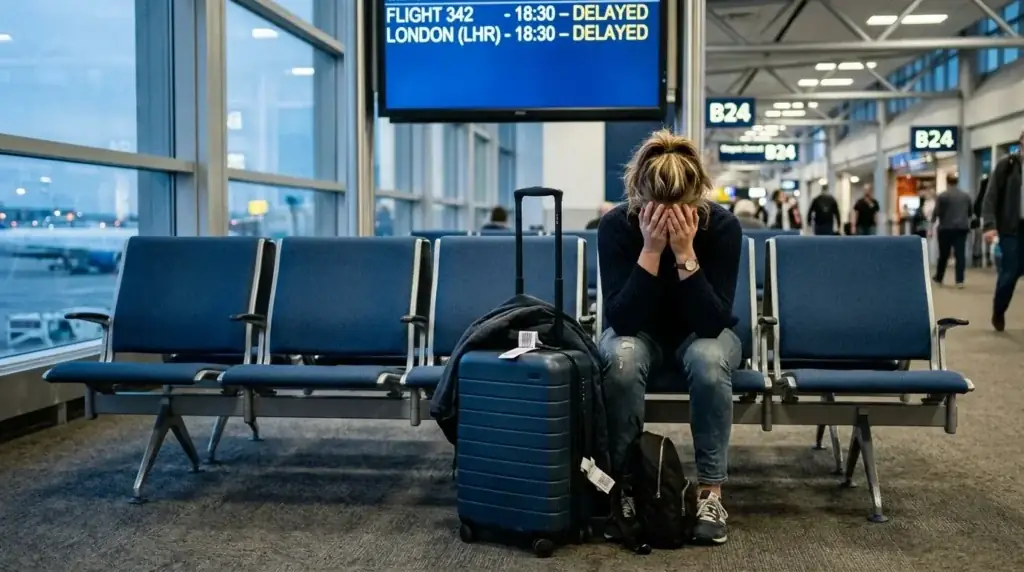
During severe weather delays, passengers on unbundled or partner-issued tickets may face lower priority during manual rebooking scenarios.
Loyalty Transfer Lock-In
Transferring non-refundable credit card points to an airline program based on phantom award availability leaves funds trapped in single-carrier ecosystems.
Governance, Maintenance, and Long-Term Adaptation
Developing a structured pre-booking process helps travelers consistently avoid costly pitfalls.
Measurement, Tracking, and Evaluation
A rigorous monitoring routine helps travelers track the real value delivered by their travel bookings over time.
Performance Evaluation Matrix
Common Misconceptions and Oversimplifications
Myth 1: First Class Always Means Lay-Flat Seats
Short-haul routes and older aircraft configurations frequently feature standard recliner seating.
Myth 2: All Premium Fares Include Lounge Privileges
Unbundled entry-level business and first class tickets frequently strip lounge permissions.
Myth 3: Partner Bookings Guarantee Identical Amenities
Operating carriers enforce their own baggage and seat policies regardless of where the ticket was purchased.
Myth 4: Booking Early Guarantees the Best Aircraft
Airlines frequently adjust fleet assignments several months before scheduled departure dates.
Ethical, Practical, or Contextual Considerations
Travelers must balance personal comfort preferences against corporate expense policies and environmental considerations. Booking higher-yielding premium fares carries a larger personal carbon footprint per passenger mile. Evaluating travel necessity ensures responsible capital allocation and resource management.
Conclusion
Understanding how to avoid first class booking mistakes requires diligent research and an understanding of modern airline operations. By evaluating aircraft fleet profiles, inspecting precise fare basis codes, and avoiding phantom award traps, travelers can consistently secure true front-cabin comfort. Strategic pre-booking audits transform expensive uncertainties into reliable, high-quality travel experiences.